
Practitioner Networks 2025-6:
Outcomes from Spring meetings (January - March)
The 2025-26 priorities are bespoke to each network group.
The table below summarises the agreed priorities for each network for 2025-26
| Art | To uphold creativity, integrity, and clarity in GCSE Art & Design by empowering teachers with deep knowledge, ethical use of AI, and best practice in assessment, so that students can create boldly, reflect honestly, and be assessed fairly. |
| Business | To work collaboratively across schools to share good practice, stretch and challenge the most able students, and explore how AI can enhance curriculum planning and delivery. |
| Computer Science | To focus on updating the curriculum, embedding AI in teaching and learning, supporting staff through targeted CPD, and enriching student experiences through clubs, trips, and industry partnerships. |
| Design | To prioritise a well-sequenced and accessible KS3 curriculum, delivered effectively even on limited budgets and by non-specialists, while ensuring the development of high-level skills and adapting to the changing Ofsted framework in Design & Technology. |
| Drama | To raise standards in Drama by sharing effective practice, supporting one another to achieve the best outcomes for students, and increasing uptake across schools by sharing Year 9 plans and resources. Explore how AI can be used to enhance teaching, planning, and creativity in Drama, ensuring teachers feel confident and supported in its use. |
| English | Empowering English leaders and their departments to embed and master oracy and explicit vocabulary instruction; to begin to utilise AI critically and purposefully; to encourage collaboration of KS3 and GCSE through moderation of assessment, all with the purpose to have a meaningful impact on classroom practice and pupil outcomes. |
| Geography | Empowering Geography teachers and their departments to begin to embed AI ethically and critically, while building coherent, curriculum-led assessment practices that foster deep thinking and progression from KS3 through GCSE. |
| History | To strategically embed AI into the history curriculum - enhancing critical thinking, enriching historical enquiry, and equipping both teachers and students with the analytical tools needed to navigate an increasingly digital world, and to collaborate on the further development of sentence-level constructive writing through intelligent scaffolding tools, while concurrently developing curriculum-driven assessments and precise, formative feedback aligned with the progression of powerful knowledge, disciplinary literacy, and historical enquiry skills. |
| Literacy | To work collaboratively as Literacy leaders on sustaining reading and data strategies across our schools. To utilise the DfE writing framework to support the development of writing strategies including a focus on EAL. |
| Maths | Strategically lead mathematics development at secondary by embedding coherent curriculum sequencing, evidence-informed assessment and feedback, and the selective, ethical integration of AI - ensuring all systems work in synergy to drive sustained improvement in teaching quality and student outcomes, ensuring all actions drive consistent, high-quality learning across the department. |
| MFL | To support language teachers and departments in preparing for the first cohort of the new GCSE through the development of coherent curricula and assessments, while also embedding AI - particularly to support vulnerable students - and driving increased uptake at Key Stage 4. |
| Music |
To provide opportunities for peer scrutiny and for colleagues to share best practice to support the review and refinement of KS3 and KS4 Curriculum sequencing. KS3 composition: How can we ensure that pupils develop the necessary musical knowledge and skills as composers? |
| PE | To empower colleagues and their departments by strengthening practice across all areas of provision. This includes developing a robust and inclusive Key Stage 4 curriculum aligned with Ofsted expectations, exploring the impact and opportunities of AI within PE, and enhancing assessment approaches to better support all learners, including those with SEND. Alongside collaboration and moderation in both Vocational and GCSE PE, the network ensures consistency, shared expertise, and high standards - equipping colleagues and their departments with the confidence and resources to deliver outstanding physical education for every student. |
| RS | To strengthen RS by ensuring clear understanding of written expectations at KS3-5, developing knowledge of non-religious worldviews, and embedding disciplinary approaches with a focus on subject-specific vocabulary. |
| Science | Empowering Science leaders and their team to develop expertise in science pedagogies, examination skills and subject knowledge to support students of all prior attainment levels to achieve excellent outcomes: T&L at KS4 through exam board research and advice The ethical use of AI in science Effective practical work at KS3 and KS4. |
| T&L |
To understand how to effectively monitor and evaluate the impact of teaching and learning professional development to apply this to individual professional development. To apply this to individual schools priorities. To share ideas about ensuring Subject Network Groups have impact in school departments. |
Artificial Intelligence (AI) emerged as a significant priority for many network groups following the July launch meeting. To continue the support and training offered by Becci Peters, Computing Subject Lead for CAS in November, the network hosted two twilight workshops in December and January to enable network leads to share best practice. These sessions were led and colleagues colleagues supported by Emily Rowland, Computing Lead for the Cranmer Education Trust, and were well attended. Network leads welcomed the opportunity to explore how a range of AI tools could support teaching and learning for example, using Copilot to enhance classroom practice and improve efficiency.
From January, 16 meetings were held across network groups. Although most were remote, PE, Music, and Art led face to face meetings. These meetings centred on a range of subject-specific themes, and the next section of the report summarises these agenda areas.
| Subject | Spring Meeting Focus |
| Art |
|
| Business |
|
| Computer Science |
|
| Design |
|
| Drama |
|
| English |
|
| Geography |
|
| History |
|
| Literacy |
|
| Maths |
|
| MFL |
|
| Music |
|
| PE |
|
| RE |
|
| Science |
|
| T&L |
|
After attending a meeting, colleagues are asked to complete a short evaluation of the meeting attended. To improve our quality assurance and better identify the needs of the membership, we have updated the evaluation questions. 75 colleagues responded.
Colleagues were asked to rate each of the following criteria for the meeting attended between 1-4, where 4 was the highest score.
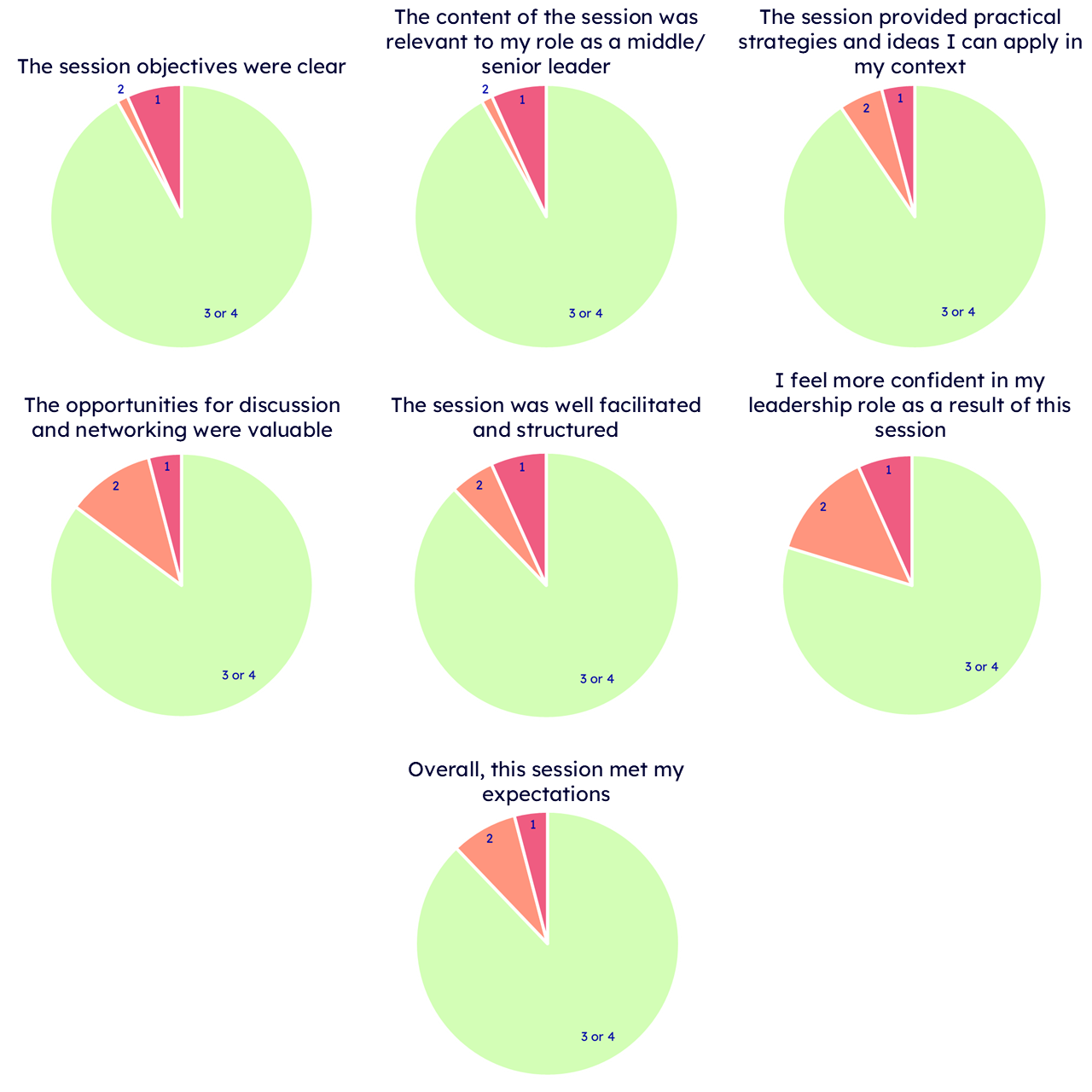
Colleagues who scored a category with a 1 have been followed up so that we are able to better understand any issues. It is clear from the responses that overwhelmingly, ones were scored as a misunderstanding of the scale. We are seeking ways to make this more clear for our next meeting.
Face-to-face meetings proved highly effective in creating a positive climate for professional dialogue and collaboration.
Colleagues were asked what was most useful and why?
Across the practitioner network spring meetings, several strong and consistent themes have emerged. Colleagues are focusing on strengthening assessment practice through improved moderation, accurate marking, and greater use of model answers. This was often supported by exam boards leading sessions for colleagues. For example, Rachel Hughes from AQA and Shelley Monk from OCR delivered exam focussed sessions to respective geography colleagues and focussed on how to support pupils in answering lower tariff questions as well as developing written styles for 6 markers. There is a clear drive to prepare students more effectively for exams, supported by enhanced use of data, standardisation and shared exemplars.
Curriculum review at KS3 is underway in several subjects to improve sequencing, composition, and support for lower attainers.
A significant cross-subject theme is the growing integration of AI, with schools exploring how AI can support teaching, assessment, feedback and resource creation, alongside developing clear expectations for staff and students. The networks are also facilitating strong collaboration, with practitioners committed to sharing resources, cascading insights to departments, and embedding the tools and strategies discussed to improve classroom practice and student outcomes.
Colleagues were asked what are your actions between now and the next meeting?
Colleagues plan to strengthen their work in several key areas before the next meeting, including integrating AI into teaching, learning and assessment, sharing good practice, and clarifying expectations for staff and students. Many intend to refine exam preparation by improving the teaching of low tariff, 6 mark and 9 mark questions, increasing the use of exemplars, and analysing mock results to target gaps. Departments plan to focus on completing moderation and standardisation processes, improving accuracy in marking, and preparing students for upcoming mocks and written exams.
Curriculum development is also a priority, with teams reviewing assessment sequencing, adapting KS3 curriculum (including composition, reading strategies and support for lower attainers), and considering updates for future delivery models. Finally, several colleagues will share findings, resources and training within their departments, engage with CPD priorities, and continue developing metacognitive and pedagogical strategies.
The Summer meeting areas of focus are below: Most meetings are face to face
| Subject | Summer Meeting Focus |
Date of meeting |
| Art |
|
Wednesday 10th June |
| Business |
|
Tuesday 23rd June |
| Computing |
|
Tuesday 16th June |
| Design |
|
Thursday 11th June |
| Drama |
|
Wednesday 29th April |
| English |
|
Tuesday 9th June |
| Geography |
|
Monday 23rd March |
| History |
|
Wednesday 17th June |
| Literacy |
|
Thursday 18th June |
| Maths |
|
Monday 22nd June |
| MFL |
|
Thursday 30th June |
| Music |
|
Monday 8th June |
| PE |
|
Wednesday 13th May (Remote) |
| RE |
|
Monday 15th June |
| Science |
|
Wednesday 24th June |
| T&L |
|
Thursday 7th May |
Thank you for your continued support and commitment. Should you have any questions, please contact us at institute@cranmeredt.org.